Guide · Trust & quality
Dental Emergency in Seoul: What to Do When Tooth Pain Can’t Wait
Dental emergencies are stressful anywhere. In Seoul, they can feel even more urgent if you are trying to make decisions in another language while dealing with pain, swelling, or a broken tooth.

Written byDr. John Yoo
Updated August 2026
5 min read

Dental emergencies are stressful anywhere. In Seoul, they can feel even more urgent if you are trying to make decisions in another language while dealing with pain, swelling, or a broken tooth.
Use this guide to sort the first decision quickly: should you contact an emergency dentist today, go to a hospital emergency department, or book a regular dental appointment soon?
Key takeaways
Severe swelling, trouble breathing or swallowing, heavy bleeding, serious facial trauma, or symptoms near the eye or neck should be treated as a medical emergency. In Korea, call 119 for ambulance or emergency help.
For tooth pain, a cracked tooth, a lost crown, wisdom tooth swelling, or a suspected infection without airway symptoms, contact an emergency dentist or urgent dental clinic as soon as possible.
Do not choose only by the cheapest quote when you are in pain. The first priority is a clear diagnosis, safe pain control, and a realistic plan for what must be done now versus what can wait.
Triage first: dentist or emergency room?
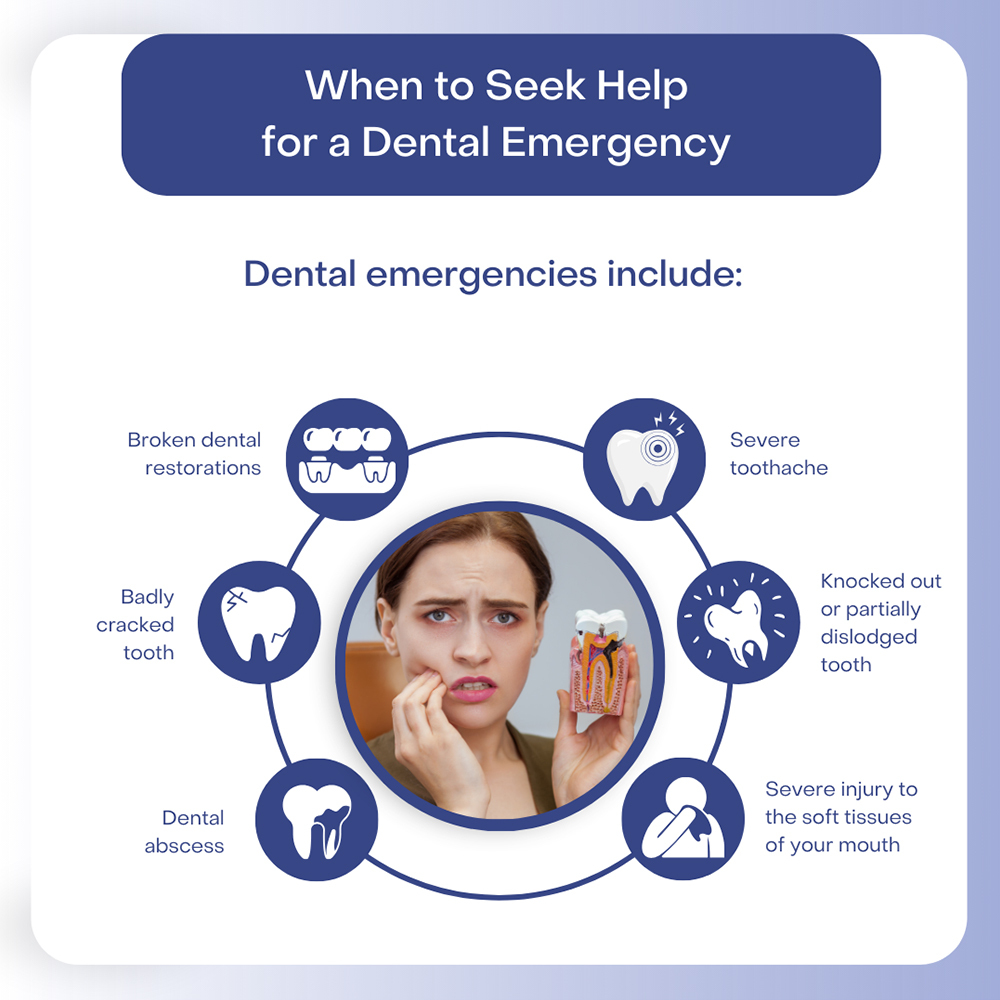
Seek urgent dental care if you have severe toothache, swelling around the gum or face, a suspected abscess, a broken tooth with pain, a lost crown with sensitivity, pain when biting, wisdom tooth infection symptoms, or trauma to a tooth.
Seek emergency medical care immediately if you have difficulty breathing, speaking, or swallowing; rapidly spreading swelling; swelling around the eye or neck; heavy bleeding that will not stop; serious facial injury; head injury symptoms; fever with worsening facial swelling; or any symptoms that feel unsafe to wait on.
If you are in Korea and it feels like a true medical emergency, call 119. Visit Seoul notes that 119 can be dialed anywhere in Korea and operates 24 hours a day.
What to do before you reach the clinic
For severe tooth pain, avoid chewing on that side, keep the area clean, and contact a clinic for a same-day assessment. Do not place aspirin directly on the gum or try to treat an infection yourself.
For a broken or cracked tooth, rinse gently with water, avoid biting on the tooth, and save any broken fragment if you have it. A dentist may need an X-ray before deciding whether the tooth can be repaired.
For a knocked-out adult tooth, time matters. Handle the tooth by the crown, not the root. If you cannot place it back in the socket safely, keep it moist in milk or an appropriate tooth-preservation product and see a dentist immediately.
For a lost crown, keep the crown and bring it with you. It may be possible to re-cement it, but only if the crown and tooth are still suitable. Do not glue it yourself with household products.
Common emergency scenarios in Seoul
Severe tooth pain can come from deep decay, nerve inflammation, a cracked tooth, an abscess, gum infection, wisdom tooth inflammation, or bite trauma. Treatment may involve medication guidance, drainage, root canal treatment, extraction, or temporary stabilization depending on the diagnosis.
A broken tooth may need smoothing, bonding, a temporary filling, crown planning, root canal evaluation, or extraction if the fracture is deep. The right answer depends on whether the nerve is involved and whether enough healthy tooth remains.
Wisdom tooth swelling may require cleaning around the area, medication, extraction planning, or urgent removal. If swelling is spreading, if you cannot open your mouth normally, or if swallowing becomes difficult, treat it as more serious.
A lost filling, inlay, or crown may feel less dramatic than severe swelling, but exposed dentin can become very sensitive. It is usually worth arranging care quickly so the tooth does not fracture further.
What a responsible emergency dentist should do first
A responsible emergency dentist should examine the area, take appropriate X-rays, identify whether infection or fracture is present, explain immediate options, and separate pain control from final treatment planning.
The first visit may not solve everything permanently. That is normal. In an emergency visit, the priority is safety, diagnosis, pain control, and stabilization. A final crown, implant, extraction plan, or cosmetic repair may need a separate appointment after the urgent problem is controlled.
Cost expectations
Emergency cost depends on diagnosis. An exam and X-ray are different from extraction, root canal treatment, incision and drainage, temporary crown repair, or surgical treatment.
Ask for two numbers: the immediate-care cost today and the likely final-treatment cost later. This helps you avoid approving a quick procedure without understanding whether a second visit, crown, medication, or specialist referral may be needed.
Cheapest is not always best in an emergency. A very low price may not include imaging, after-care instructions, a specialist referral, or the definitive treatment you will need after the pain settles. Look for clarity, communication, and an appropriate treatment plan, not just the lowest entry price.
What to bring or send before the visit
Bring your passport or ID, medication list, allergy information, medical conditions, recent dental X-rays if you have them, photos of the tooth if relevant, and your travel schedule.
If you are taking blood thinners, have heart conditions, diabetes, immune suppression, pregnancy, recent surgery, or a history of medication-related jaw problems, tell the clinic before treatment.
If you contact a clinic by message, send a clear photo, describe when the pain started, whether there is swelling or fever, what makes the pain worse, and how long you will be in Korea. This helps the clinic decide whether you need same-day care, a specialist, or hospital evaluation.
How Ora Korea fits in
Ora Korea helps foreign patients find responsible dental care in Seoul.
For urgent cases, the goal is not to push you into the biggest treatment plan. It is to help you find the right first step: stabilize the pain, understand the diagnosis, and decide what should happen next.
Sources and patient safety references
Visit Seoul: Medical emergencies in Seoul | https://english.visitseoul.net/medical-emergencies
NHS: Dental abscess | https://www.nhs.uk/conditions/dental-abscess/
NHS: How to find an emergency or urgent dentist appointment | https://www.nhs.uk/nhs-services/dentists/how-to-find-an-nhs-dentist-in-an-emergency/
American Dental Association, MouthHealthy: Dental emergencies | https://www.mouthhealthy.org/dental-care/dental-emergencies
Questions
What should I do for a dental emergency in Seoul?
If you have severe swelling, trouble breathing or swallowing, heavy bleeding, serious facial trauma, or symptoms near the eye or neck, call 119. For tooth pain, a broken tooth, lost crown, wisdom tooth swelling, or suspected infection without airway symptoms, contact an emergency dentist or urgent dental clinic as soon as possible.
Can an emergency dentist in Seoul fix the problem the same day?
Sometimes. The first visit may focus on diagnosis, X-rays, pain control, drainage, a temporary filling, or crown repair. Final treatment such as a root canal, extraction, crown, or implant plan may need a follow-up visit.
When should I go to a hospital instead of a dentist?
Go to emergency medical care or call 119 if you have trouble breathing, speaking, or swallowing; rapidly spreading swelling; swelling near the eye or neck; heavy bleeding; serious facial injury; head injury symptoms; or fever with worsening facial swelling.
What should I send a clinic before visiting?
Send a clear photo, when the pain started, whether there is swelling or fever, your medication and allergy information, any recent dental X-rays, and how long you will be in Korea.
How much does emergency dental care cost in Seoul?
It depends on the diagnosis. Ask for the immediate-care cost today and the likely final-treatment cost later. The cheapest quote may not include imaging, aftercare instructions, specialist referral, or definitive treatment.
Sources
- Visit Seoul: Medical emergencies in Seoul, Visit Seoul
- NHS: Dental abscess, NHS
- NHS: How to find an emergency or urgent dentist appointment, NHS
- American Dental Association: Dental emergencies, MouthHealthy / ADA
Found this useful?

Written by
Dr. John Yoo
Columbia-trained, U.S. based dentist guiding people who come to Ora with proper follow-up care, dentist to dentist communication, and long-term support.