
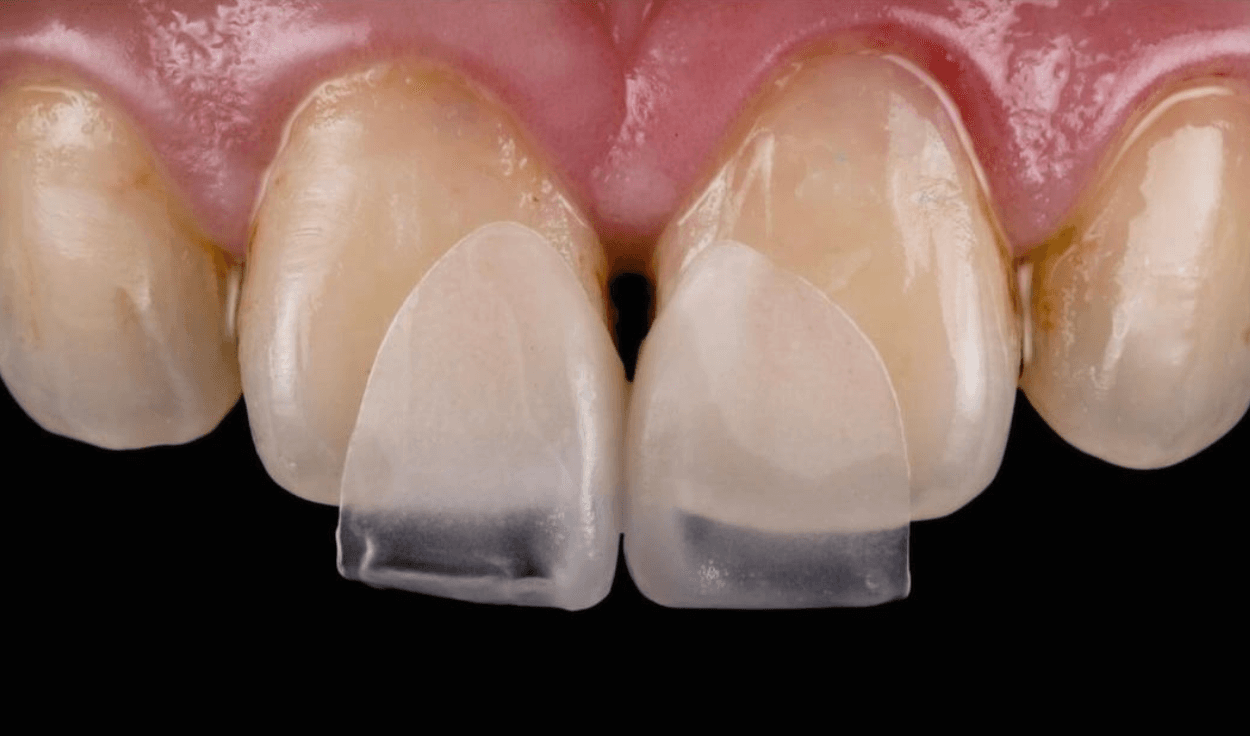
Non Prep Veneers in Korea
Changing your smile without shaving the front of your teeth sounds almost too good to be true. Sometimes it is an excellent option. Sometimes it simply adds ceramic where there was no room for it. This guide explains how to tell the difference before you commit.
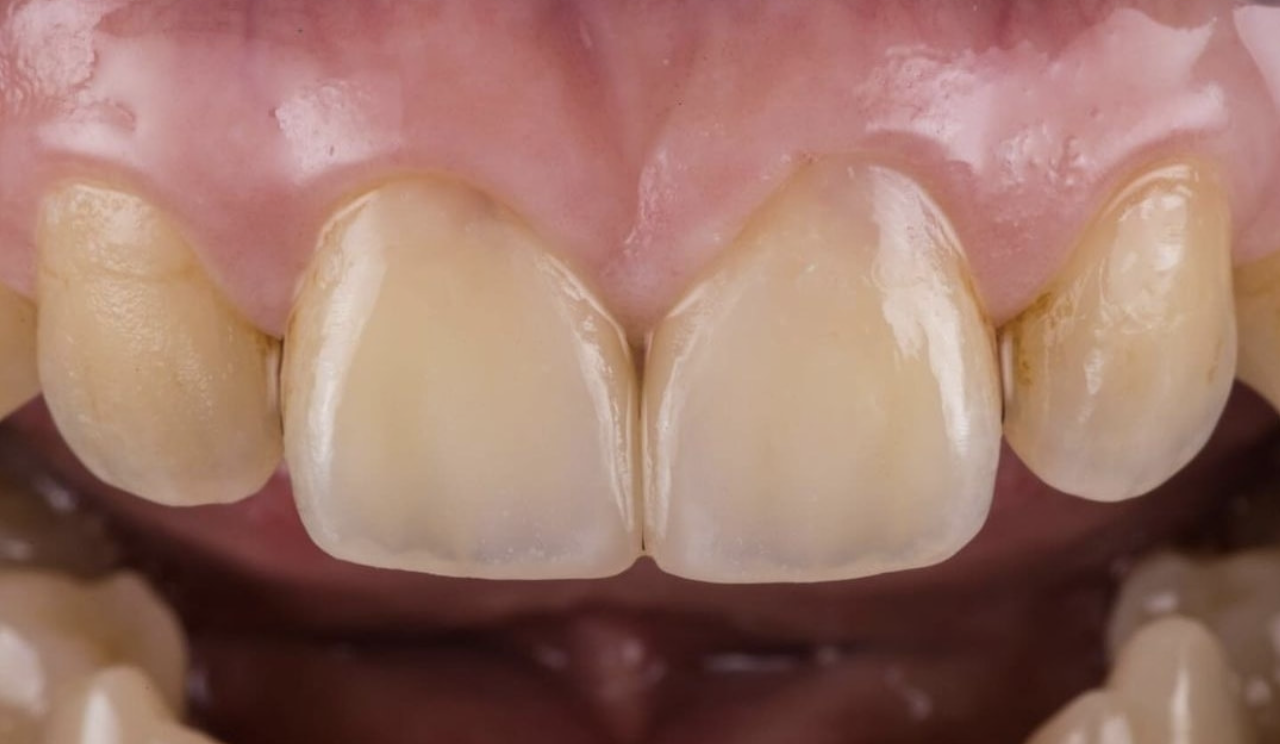
No Shaving Sounds Perfect So What Is the Catch
Non-prep veneers promise a simple idea: bond a thin ceramic shell to the tooth while preserving the enamel underneath. The appeal is obvious. Less drilling. More natural tooth structure. A faster route to a different smile.
But ceramic is not invisible. It still takes up space. If your teeth are small, slightly set back, or separated by a gap, that extra volume may create a better proportion. If they are already large, prominent, or crowded, the same veneer may look bulky or interfere with the bite.
The short answer: non-prep veneers can be beautifully conservative for the right smile. The real skill lies in knowing when not to use them.
What Non Prep Actually Means
A true non-prep veneer is bonded without intentionally reducing the front surface of the enamel. However, the label is not perfectly standardized. Some cases still need selective smoothing of a sharp edge, slight separation between teeth, or finishing around a margin.
That is why one question matters more than the name of the treatment: what exactly will happen to each tooth? A thoughtful plan may be truly non-prep on one tooth and minimally prepared on the next.
Non-prep also does not mean fully reversible. Removing bonded ceramic can alter or damage enamel, and any veneer may eventually need repair or replacement. This is still an elective, long-term commitment.
Ceramic thickness varies by material and purpose. Ultra-thin veneers may begin around 0.3 mm, but more thickness may be needed for strength, contour, or color masking [7]. A fraction of a millimeter sounds tiny. On a front tooth that is already prominent, it can be the difference between natural and overbuilt.
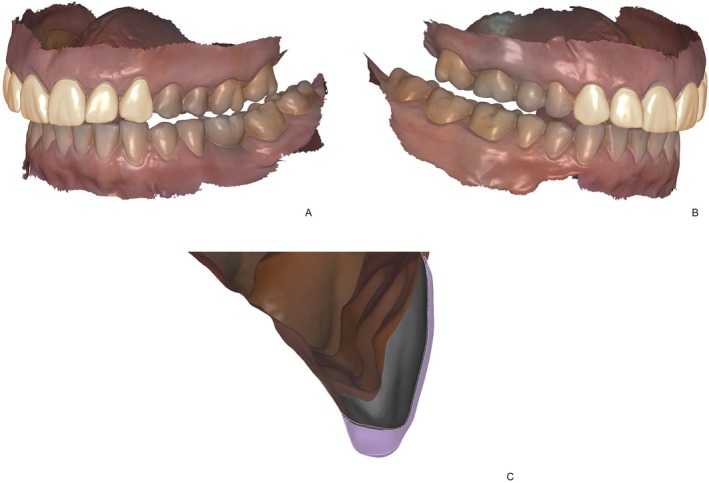
Digital design views from one proof-of-concept case. Panel C shows an ultra-thin non-prep veneer in cross-section; it is not a universal minimum-thickness recommendation. [Unkovskiy et al. 2025 Figure 3 CC BY 4.0](https://doi.org/10.1111/jerd.13427)
The Real Superpower Is Enamel
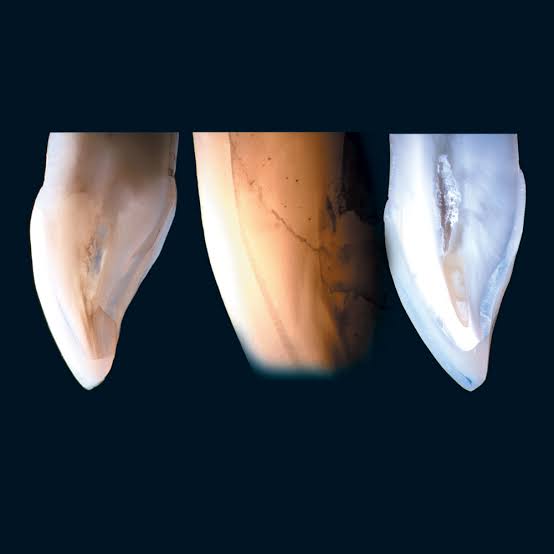
The biggest advantage of non-prep treatment is not speed or convenience. It is enamel. Enamel is the most predictable surface for adhesive bonding, and preserving it means sacrificing less healthy tooth structure.
A 2025 retrospective study followed 672 ceramic veneers in 189 patients for 1 to 15 years. Estimated survival was 96.7% when veneers were bonded only to enamel and 93.9% when more than 30% of the bonding surface was dentin. Dentin exposure was associated with higher odds of failure. The study came from one clinician, so these numbers are useful evidence rather than a personal guarantee [4].
Preserving enamel may also reduce preparation-related sensitivity, but it does not make sensitivity impossible. Gum manipulation, bonding, bite changes, or an existing dental problem can still cause symptoms. Sensitive teeth need a diagnosis, not an automatic cosmetic cover-up.
The practical goal is simple: preserve as much enamel as possible while creating enough room for a natural restoration. Occasionally, removing a tiny and carefully planned amount of enamel is more conservative than forcing extra ceramic onto a tooth that has no space for it.
What the Research Says Without the Homework
The research is encouraging, but there is an important catch: studies on completely unprepared teeth are still fewer and less consistent than studies on ceramic veneers overall.
- Promising range, limited evidence. A 2025 systematic review included four comparative studies, 126 patients, and 612 veneers followed for 2 to 9 years. Reported survival ranged from 91% to 100%, but four studies cannot define one success rate for every material, dentist, and bite [1].
- A strong long-term result, with a caveat. One prospective study followed 186 veneers in 35 patients for about 9 years. The combined no-prep and minimally invasive group recorded 100% survival, but those two preparation types were grouped together and the patient sample was small [2].
- Less drilling did not mean fewer problems. A one-year study compared 55 prepless and 55 minimally invasive veneers in 12 patients. Esthetic and gum outcomes were similar, but fractures and one debonding occurred more often in the prepless group [3].
- The famous 10-year number is not non-prep specific. A review of 25 studies and 6,500 ceramic veneers estimated 95.5% cumulative survival at 10 years. It included several preparation designs, so it should not be marketed as a guaranteed non-prep survival rate [5].
Translation: non-prep veneers can work very well in carefully selected patients. The evidence does not support using the same no-shave plan for every smile.
Will Non Prep Veneers Look Bulky
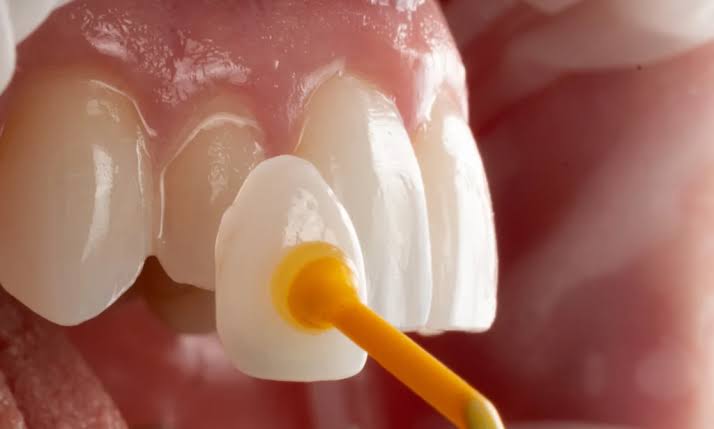
Every veneer adds material to the front or edge of a tooth. On a small, slightly recessed, or spaced tooth, that added volume can improve proportion. On a broad, protrusive, or crowded tooth, it can create an overcontoured result that looks and feels too thick.
Bulk is not only a cosmetic concern. Too much contour near the gumline can make plaque control harder and may contribute to inflammation when margins and emergence profiles are poorly designed. Studies report variable gum outcomes, so this risk must be judged clinically rather than assumed in every case [8].
The Quick Candidate Check
| More likely to suit an additive approach | Requires caution or another option |
|---|---|
| Small, narrow, conical, or undersized teeth | Large, broad, or protrusive teeth |
| Small spaces or a mild midline gap | Moderate or severe crowding and rotation |
| Teeth positioned slightly toward the tongue | Teeth already positioned toward the lips |
| Minor shape or edge-length changes | A major reduction in tooth size or prominence |
| A modest shade improvement | Severe intrinsic discoloration or a very large shade change |
| Healthy gums and sufficient enamel | Active decay, gum inflammation, or limited enamel |
| Stable bite with adequate space | Edge-to-edge contact, deep bite, or restricted clearance |
| Controlled grinding habits | Unmanaged bruxism or frequent biting of hard objects |
A Mock Up Is Your Smile Rehearsal
A digital smile design can show length, symmetry, and general proportions. It cannot tell you exactly how added volume will feel inside your mouth. A physical intraoral mock-up can.
Temporary material is transferred from a wax-up or printed design onto the teeth. You can then look, talk, smile, and move your jaw before committing to ceramic treatment [6]. Think of it as a dress rehearsal for your smile.
Do not judge the mock-up from one front-view photograph. Check:
- Side-profile thickness and lip support
- Tooth length during a relaxed smile and full smile
- Speech, especially F and V sounds
- Bite contact during forward and side-to-side movements
- Cleaning access around the gumline and between teeth
If the mock-up looks bulky, affects speech, or feels wrong in the bite, that is valuable information. The plan can still change to selective minimal preparation, orthodontic alignment, whitening, direct composite bonding, or no restorative treatment.
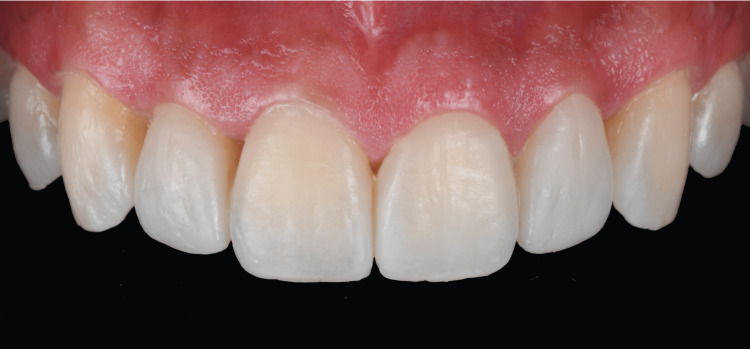
A diagnostic intraoral mock-up used to assess the proposed tooth volume and contour before preparation. Villalobos-Tinoco et al. 2022 Figure 4 CC BY 4.0
Your Bite Gets a Vote Too
A beautiful veneer still needs enough space to survive. Edge-to-edge bites, deep overbites, crossbites, and heavy grinding can change the design or make veneer treatment less appropriate. Lower front teeth deserve special caution because space is often limited and the opposing teeth may strike the ceramic directly.
Mild spacing or a slightly recessed tooth may create useful room for an additive veneer. More obvious rotation or protrusion may be better corrected with orthodontics first. Moving the tooth can preserve more enamel and prevent an unnecessarily thick restoration.
Very Thin and Very White Do Not Always Mix
Very thin ceramic is translucent, which means the natural tooth color still shows through. Material opacity, ceramic thickness, cement shade, and the amount of discoloration all affect the final result.
In a laboratory study of minimally invasive lithium-disilicate restorations, approximately 0.4 to 0.6 mm was needed to mask a color difference, depending on translucency and cement choice [7]. A laboratory result cannot predict every smile, but the tradeoff is real: more masking usually requires more opacity, more thickness, or both.
If you want a dramatic shade change, whitening before treatment, a minimal-prep design, or a different restoration may be more realistic. A trial shade and mock-up will tell you far more than a screenshot of somebody else's smile.
Sometimes Minimal Prep Is More Conservative
Non-prep, minimal-prep, and conventional veneers are points on a spectrum, not rival teams. One person may need a true non-prep veneer on a small lateral incisor, selective minimal preparation on a prominent central incisor, and no veneer at all on another tooth.
A tooth-by-tooth plan can be more conservative than forcing every tooth into the same category. Conventional preparation may still be needed to reduce prominence, correct a difficult path of insertion, mask severe discoloration, replace an existing restoration, or manage a complex shape. Even then, staying within enamel is preferable whenever clinically possible.
Eight Questions to Ask Before You Book a Flight
- Do you expect zero preparation on every tooth, or will some teeth need selective enamel reduction?
- Can you show the planned reduction in millimeters for each tooth?
- Will I receive a physical mock-up that I can evaluate from the front and side?
- Which ceramic and minimum thickness will you use, and how will it mask my current tooth color?
- How have you evaluated my bite, grinding habits, and lower-tooth contacts?
- What happens if the mock-up looks bulky or changes my speech?
- How many visits are planned, and how much time is reserved for adjustments before I leave Korea?
- Who will handle follow-up, repair, or rebonding after I return home?
Four Red Flags Worth Pausing For
- A zero-prep promise before a full examination. Tooth position, bite, enamel, and shade must be assessed first.
- The same plan for every front tooth. Conservative dentistry is usually tooth specific, not package specific.
- A dramatic color promise with ultra-thin ceramic. Strong masking often needs more opacity, more thickness, or a different sequence of treatment.
- No clear follow-up plan after you leave Korea. Ask who will manage adjustments, rebonding, or repairs at home.
Quick Answers Before You Decide
Are non-prep veneers really no shave
Sometimes. A true non-prep case can avoid intentional facial reduction, but minor smoothing, separation, or margin finishing may still be needed. Ask for a tooth-by-tooth preparation plan.
Can non-prep veneers look bulky
Possibly. The risk is higher when teeth are already large, prominent, crowded, or positioned toward the lips. A physical mock-up is the best practical way to judge added volume before treatment.
Do non-prep veneers cause sensitivity
Preserving enamel may lower the risk of preparation-related sensitivity, but it does not eliminate every possible symptom. Existing sensitivity should be diagnosed before cosmetic treatment.
Are non-prep veneers reversible
They should not be described as predictably reversible. Bonded ceramic removal can affect enamel, and future repair or replacement may be necessary.
How long do non-prep veneers last
Small clinical studies report favorable outcomes, including up to nine years of follow-up, but the no-prep-specific evidence remains limited. Longevity depends on case selection, enamel bonding, material, bite, maintenance, and how each study defines failure [1,2].
The Bottom Line
Non-prep veneers are most convincing when the teeth are small, well aligned, rich in healthy enamel, and surrounded by enough bite space. They become less predictable when the goal is to make teeth smaller, less prominent, dramatically whiter, or much straighter.
A careful dentist should be equally comfortable recommending true non-prep treatment, selective minimal preparation, orthodontics, composite bonding, whitening, or no treatment. The best plan is not the one that removes the least enamel at any cost. It is the one that preserves healthy tooth structure and still produces a natural, maintainable result.
Medical disclaimer This article is for general education and does not replace an examination, diagnosis, or individualized treatment plan from a licensed dentist.
Are you interested in learning more about veneer material differences? Please check this article: Veneers in Korea: 4 materials to compare before choosing your treatment