
Written byOra Korea Staff
Updated August 2026
In short
- Composite fillings are usually best for smaller cavities that have sound remaining tooth structure.
- Inlays and onlays are used when a tooth needs more strength than a filling but does not need a full crown.
- A crown may be needed when the tooth is cracked, heavily filled, root-canal treated, or too weak to hold a normal filling.
- Costs in Korea can be meaningfully lower than in the U.S., Australia, Canada, or parts of Europe, but the quote should be based on diagnosis, not just a menu price.
- The responsible plan is to repair only what needs repair, preserve healthy tooth structure, and make follow-up clear before you leave Korea.
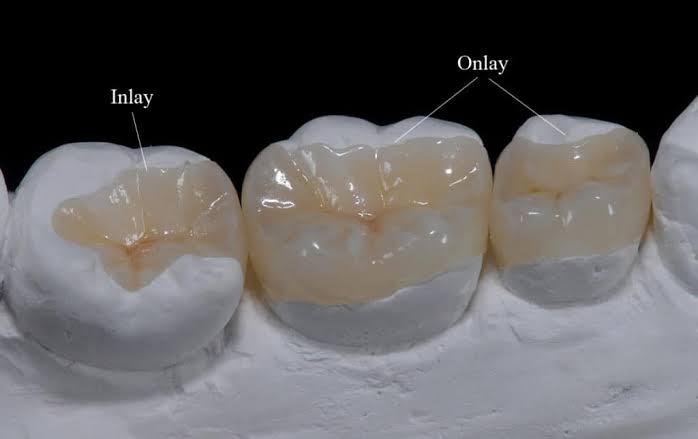
Fillings are common, but they are not all the same. A tiny cavity on a front tooth, a worn back molar, a cracked old filling, and a tooth that has already had a root canal are different problems. They may all begin with the same patient question - can this be filled? - but the right answer can be composite, an inlay, an onlay, a crown, or sometimes a root canal first.
In Korea, restorative dentistry can be efficient and cost-effective, especially for patients who are already traveling or comparing a high quote from home. But a good clinic should not simply ask which material you want. It should explain how much tooth is left, whether the bite is stable, whether the nerve is involved, and how long the repair is expected to last.
The visual progression: filling, inlay, onlay, crown
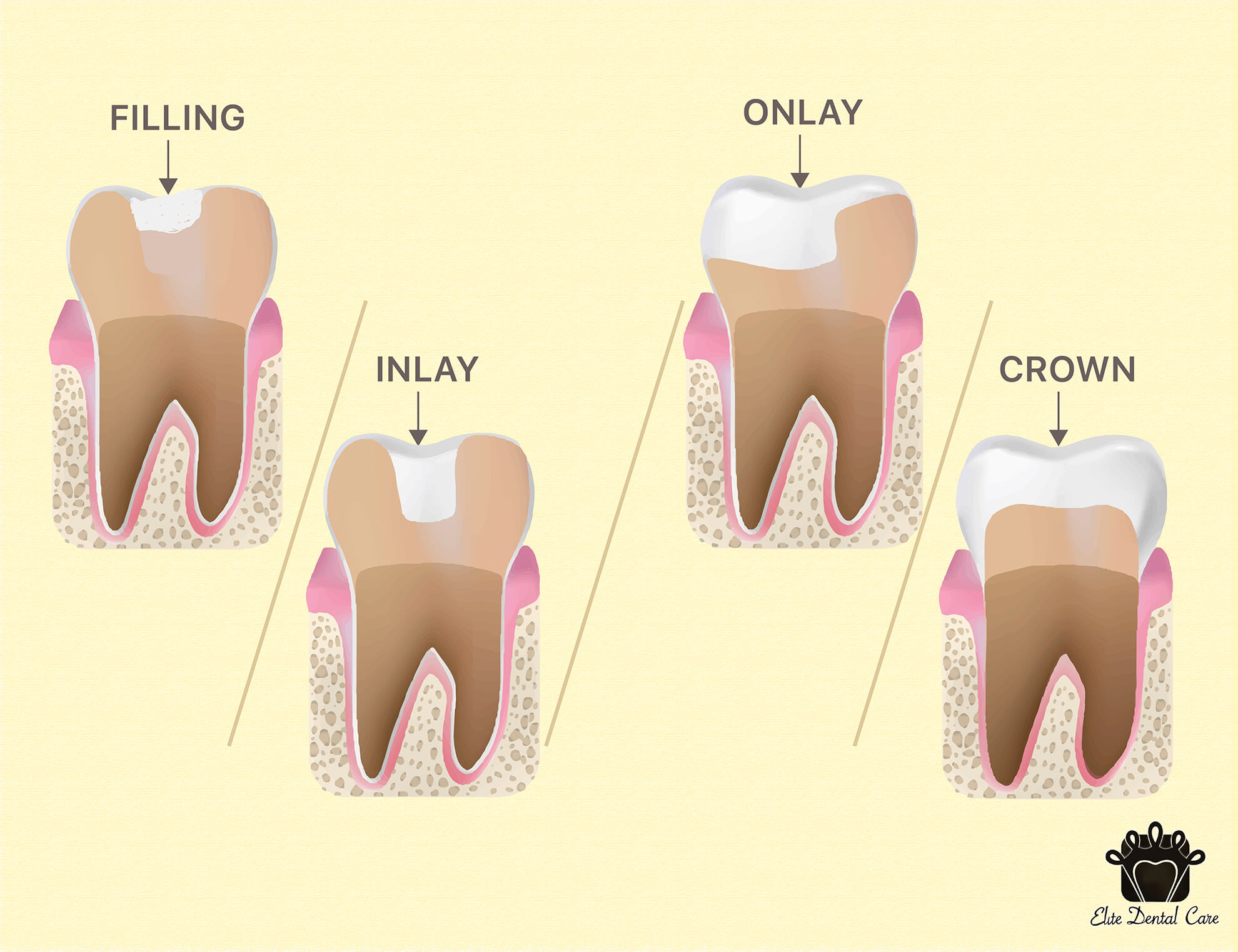
The easiest way to understand restorative dental work is to picture how much of the tooth needs to be rebuilt. A composite filling is the smallest repair. An inlay is a stronger piece that fits inside the chewing surface. An onlay covers more of the tooth, including one or more weakened corners. A crown covers the tooth more completely when the remaining structure needs protection.
This progression does not mean a crown is always the best or most advanced option. It means the tooth needs more coverage. If a small filling will hold, that is usually more conservative. If the tooth is too weak, a larger restoration may protect it better.
For patients, the key question is not "which option is best?" It is "how much healthy tooth is left, and what is strong enough without removing more tooth than needed?" A good clinic should be able to show this clearly on the X-ray, photo, scan, or diagram before treatment starts.
Why patients fly to Korea for fillings and restorative dental work
Patients often think of Korea for veneers or implants, but fillings, inlays, onlays, and crowns are some of the most practical reasons to get dental work checked while in Seoul. These are everyday procedures, but they can become expensive quickly in countries where restorative dentistry is priced high or access is delayed.
For many patients from the U.S., Australia, Canada, or parts of Europe, Korea can offer meaningful savings on routine restorative care. Composite fillings, ceramic inlays, zirconia crowns, and other repairs may cost less than comparable private dental fees at home. That can make it easier to handle problems before they turn into root canals, extractions, or larger treatment plans.
But cost should not be the only reason to do the work. A lower price is useful only if the diagnosis is right, the tooth is restored properly, and the patient knows how to maintain it afterwards. The responsible version of dental travel is not doing every possible procedure while you are in Korea. It is getting a clear diagnosis, repairing what needs repair, and leaving with records and follow-up instructions.
What dental fillings may cost in Korea
Costs vary by clinic, tooth, size, material, and complexity. The ranges below are planning ranges, not guaranteed quotes. USD estimates are rounded using roughly 1,400 Korean won per USD, so the exact conversion will move with the exchange rate.
- Composite resin filling: often around 80,000 to 250,000 Korean won (about USD $55 to $180) per tooth for straightforward cases.
- Ceramic or gold inlay: often around 250,000 to 500,000 Korean won (about USD $180 to $300) per tooth depending on material and lab work.
- Onlay: often around 300,000 to 800,000 Korean won (about USD $215 to $570), depending on how much tooth structure it covers and the material used.
- Crown: often around 400,000 to 900,000 Korean won (about USD $280 to $640) for common crown materials such as porcelain-fused-to-metal or zirconia, with some premium materials or complex cases costing more.
The quote can change if the cavity is deep, the existing filling has failed, the tooth is cracked, the bite needs adjustment, the clinic needs additional imaging, or the tooth needs root canal treatment before the final restoration. That is why a responsible clinic should not treat a price list as the diagnosis.
When a composite filling may be enough
A composite filling may be enough when the cavity is small to moderate, there is enough healthy tooth structure left, the biting forces are manageable, and the tooth is not cracked or nerve-involved. It is also commonly used for front teeth, small chips, worn edges, and visible areas where color matching matters.
Composite is convenient because it is usually finished in one visit. The dentist removes the decay, bonds the material to the tooth, shapes it, checks the bite, and polishes it. For a traveler, this can be one of the easiest types of dental treatment to fit into a short stay.
The limitation is strength. Composite can work very well, but it is still a direct filling material. If the cavity is large, the cusp is weak, or the tooth already has a large old filling, simply adding more filling may not be the longest-lasting repair.
When an inlay or onlay makes sense
An inlay or onlay is often considered when a tooth is too damaged for a simple filling but not damaged enough to justify a crown. This is common with back teeth, old large fillings, cracked cusps, or cavities that affect the chewing surface more broadly.
The advantage is that an inlay or onlay can be stronger and more precisely shaped than a large direct filling. It may also preserve more tooth than a full crown. Because it usually involves lab or CAD/CAM work, it may require more time than a same-day composite filling, depending on the clinic's system.
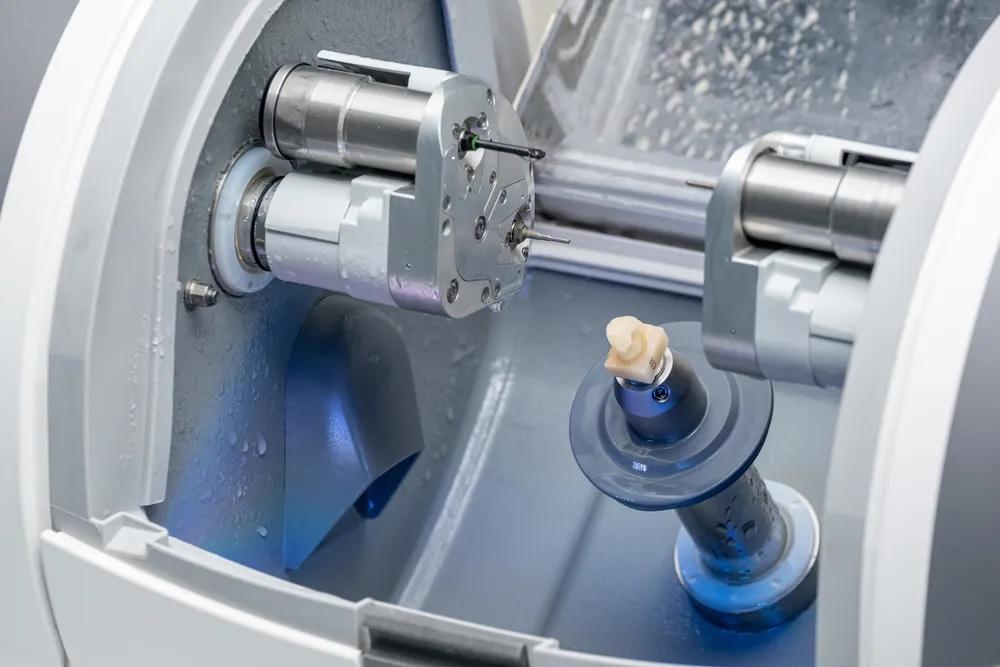
CAD/CAM technology is one reason this workflow can be more efficient. It uses digital design and computer-guided manufacturing to help create restorations with a high level of accuracy, especially when the clinic is coordinating scans, lab work, and fit checks on a tighter timeline.
That is one reason Korea can be a practical option for some patients. In a dense dental market like Seoul, many clinics prioritize speed, accuracy, and close communication with dental labs; some also have in-house lab support. If you are hoping for a same-day crown or faster turnaround, the dentist should confirm whether that timeline is appropriate for your tooth, material, and travel schedule before treatment begins.
When a crown is needed instead
A crown may be needed when there is not enough tooth left to safely hold a filling or inlay. Common reasons include a very large cavity, a broken cusp, a cracked tooth, a tooth with multiple old fillings, heavy bite forces, or a tooth that has had root canal treatment.
Crowns are protective, but they are also more involved. The dentist has to prepare the tooth, choose the material, take a scan or impression, make or order the crown, check the bite, and bond or cement it. Some clinics can make crowns quickly with digital systems, while others need lab time over several days.
A crown should not be treated as an automatic upgrade. It removes more tooth structure than a filling or inlay. If a smaller restoration is strong enough, preserving tooth structure is usually better. If the tooth is too weak, however, choosing a filling just because it is cheaper can lead to a fracture later and it can cost you more.
What to expect at the appointment
The dentist will usually start with an exam and X-rays, and may also take photos or a digital scan depending on the tooth. They may check your bite, test sensitivity, look for cracks, inspect old fillings, and evaluate whether the nerve is healthy. If the decay is deep or the symptoms suggest nerve involvement, the dentist may explain that a filling, inlay, onlay, or crown alone may not solve the problem.
A good clinic should explain what material is being used, why that option was chosen, how many visits are needed, whether a temporary restoration is required, when the final piece will be placed, and what symptoms should prompt follow-up after you leave.
Afterwards and aftercare
After a filling, mild sensitivity can happen, especially if the cavity was deep. A filling can also feel high when you bite, even if it looks fine. That should be adjusted rather than ignored.
After an inlay, onlay, or crown, the bite and margins matter. If the restoration feels too tall, traps floss, catches food, or causes pressure when chewing, the clinic should know. A small adjustment can make the difference between a comfortable restoration and a tooth that stays irritated.
Long-term care is simple but important: brush, floss, clean around the edges of the restoration, avoid chewing very hard objects, and keep routine checkups. Fillings and crowns do not make a tooth immune to decay. The edges still need maintenance.
If you live outside Korea, ask for treatment notes, X-rays, material details, and follow-up instructions before you leave. Follow-up can happen locally, remotely, or during your next Korea visit, but it should be planned.
Questions people usually ask
Can I get a filling in Korea the same day?
Often, yes. Straightforward composite fillings are commonly completed in one visit if the clinic has time and the tooth does not need more complex care.
Is composite filling the same as resin filling?
In many patient conversations, yes. Resin filling usually refers to tooth-colored composite resin used to repair small or moderate cavities.
Is an inlay better than a filling?
Not always. An inlay can be stronger for larger chewing-surface repairs, but a small cavity does not need an inlay just because it is more expensive. The choice depends on the size and location of the damage.
Is an onlay the same as a crown?
No. An onlay covers part of the tooth, usually including one or more cusps. A crown covers the tooth more fully. Onlays can be a conservative middle option when the tooth needs strength but does not need full coverage.
When do I need a crown instead of a filling?
You may need a crown when the tooth is cracked, heavily damaged, root-canal treated, missing too much structure, or likely to fracture under chewing pressure.
How long should I stay in Korea for a crown?
It depends on the clinic and lab workflow. Some crowns can be completed quickly, but it is safer to leave several days for preparation, fabrication, fit checks, and adjustments.
Is restorative dental work in Korea cheaper than at home?
For many patients, yes, especially compared with private dental prices in the U.S., Australia, Canada, or parts of Europe. The exact savings depend on the diagnosis, tooth, material, and clinic.
Should I replace all my old fillings while I am in Korea?
Not automatically. Old fillings should be replaced when they are cracked, leaking, decayed around the edges, poorly shaped, or causing symptoms. If they are stable, monitoring may be better than unnecessary replacement.
What should I ask before starting treatment?
Ask what the diagnosis is, whether the nerve looks healthy, how much tooth structure is left, what material is being used, whether a crown or inlay is truly necessary, how many visits are needed, and what follow-up should happen after you return home.
Sources
- American Dental Association, MouthHealthy — Dental filling options
- https://www.mouthhealthy.org/all-topics-a-z/dental-filling-options
- Cleveland Clinic — Dental fillings: types, materials, and uses
- https://my.clevelandclinic.org/health/treatments/17002-dental-fillings
- Cleveland Clinic — Restorative dentistry, including inlays, onlays, and crowns
- https://my.clevelandclinic.org/health/treatments/10924-dental-restorations
- NHS — Dental treatments, including fillings, root canal treatment, and crowns
- https://www.nhs.uk/live-well/healthy-teeth-and-gums/dental-treatments/
- Frankfurter — USD/KRW exchange-rate reference
- https://www.frankfurter.app/
Found this useful?