
Dental implant treatment in Korea can offer strong value for international patients, but the lowest advertised fee or shortest timeline rarely tells the whole story. A straightforward implant may fit into a relatively simple plan. A case involving extraction, infection, limited bone, a sinus lift, or multiple missing teeth may require several stages over many months.
Before comparing clinics, understand what is being quoted, who will perform each stage, whether the proposed crown is provisional or definitive, and how follow-up will work after you leave Korea.
Key takeaway There is no universal one-week implant plan. Immediate placement and rapid restoration can work in carefully selected cases, but primary stability, bone volume, infection status, bite forces, grafting needs, and the final prosthetic design determine the safest timeline.
What a Dental Implant Actually Includes
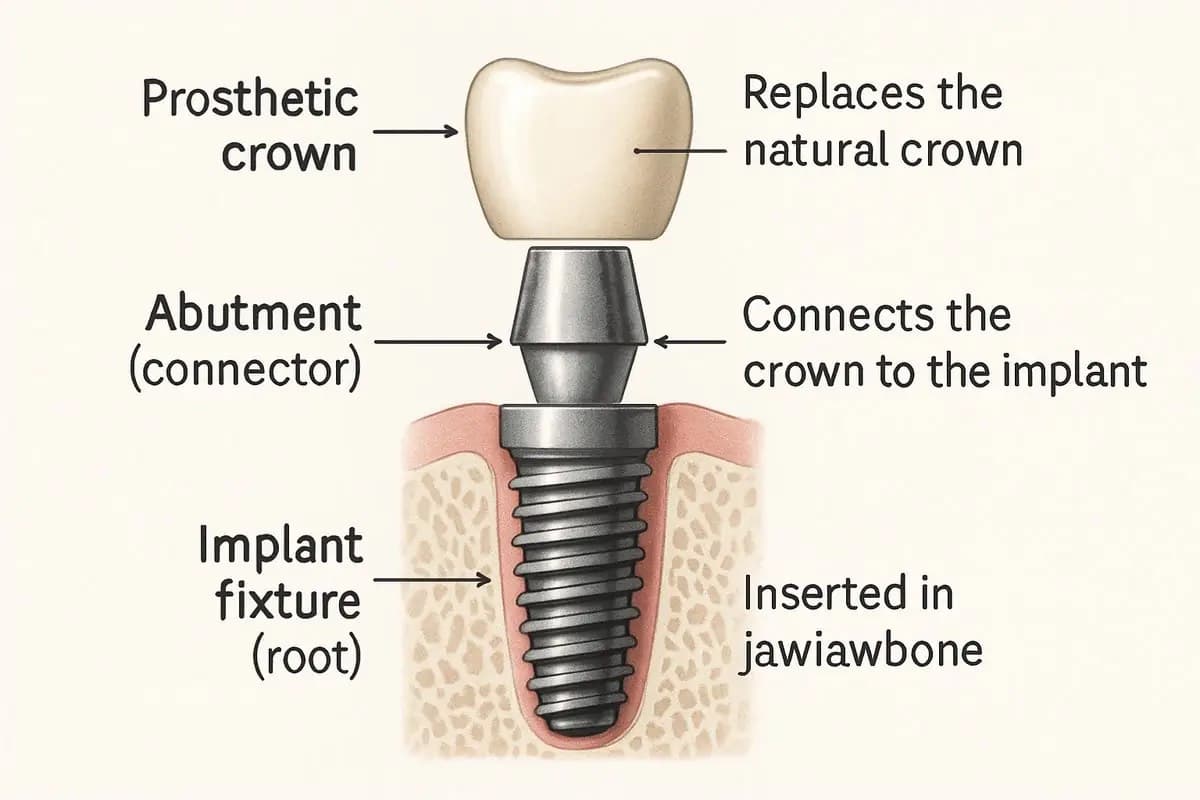
A complete implant restoration is usually made of three main components:
- Fixture: the implant body placed in the jawbone.
- Abutment: the connector between the implant fixture and the crown.
- Crown: the visible tooth-shaped restoration.
A quote described simply as an implant may include only the fixture, or it may include the fixture, abutment, and crown. Ask the clinic to list every component and identify the crown material. Also ask whether any tooth shown during healing is a temporary restoration or the planned final crown.
Diagnosis Comes Before the Timeline
The most important decision is not how quickly an implant can be completed. It is whether the implant can be placed in a safe, restoratively useful position and remain stable while the surrounding bone heals.
A pre-treatment assessment may include a clinical examination, periodontal evaluation, bite analysis, panoramic or periapical radiographs, and CBCT imaging when three-dimensional information is needed. For immediate implant placement, 3D imaging can be especially important because the dentist must evaluate the socket walls, available anchorage, neighboring roots, nerves, and sinus anatomy.
The evaluation should help answer:
- Can the failing tooth be removed without damaging the surrounding bone?
- Can the implant achieve primary stability in the correct restorative position?
- Is there active infection, major bone loss, or a damaged socket wall?
- Is bone grafting needed, and can it be performed at the same appointment?
- Can a temporary tooth be placed without harmful bite contact?
- What follow-up imaging and maintenance will be required?
Clinical reference: AAOMR position statement on imaging for dental implant planning
Can Dental Implants Be Completed in One Trip?
Sometimes - but the word completed needs clarification. Immediate implant placement means the fixture is inserted at the same appointment as extraction. Immediate restoration or loading refers to how soon a prosthesis is connected. These are separate clinical decisions.
For a well-selected patient, a clinic may place the implant and provide a temporary tooth, or occasionally a final restoration, during the same stay. This should not be promised before the surgeon confirms primary stability and the condition of the bone and soft tissue.
| Treatment path | Typical sequence | Travel implication |
|---|---|---|
| Immediate / fast-track | Extraction and implant placement may occur together. A provisional - and in selected cases a definitive restoration - may be delivered during the same stay. | Potentially one trip, but only when diagnosis, primary stability, bite, and tissue conditions are favorable. |
| Standard staged treatment | Implant surgery is followed by an unloaded healing period. The abutment and crown are completed after integration is confirmed. | Usually requires a later restorative visit or coordination with a dentist at home. |
| Simultaneous grafting | A localized graft or sinus procedure is performed at the same appointment as implant placement when adequate stability can still be achieved. | The surgical trip may be combined, but the final crown may still require a later stage. |
| Staged bone augmentation | Bone grafting is completed first, followed by healing, implant placement, another healing phase, and the final restoration. | Often the longest pathway and may require two or more visits over several months. |
One-week treatment: the question to ask If a clinic says the implant can be finished in one week, ask whether the tooth will be provisional or definitive, whether it will touch the opposing teeth during biting, and what happens if the implant does not achieve the expected stability during surgery.
Consensus guidance: ITI implant placement and loading protocols
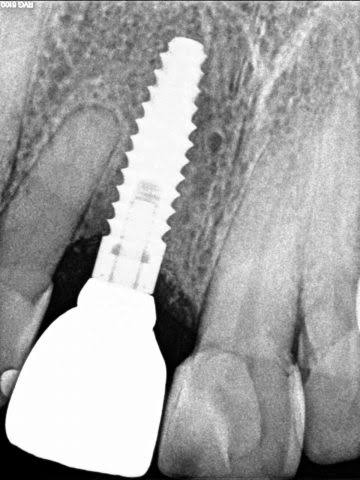
Position paper: Immediate implant placement prerequisites and CBCT planning
Osseointegration and Healing Time
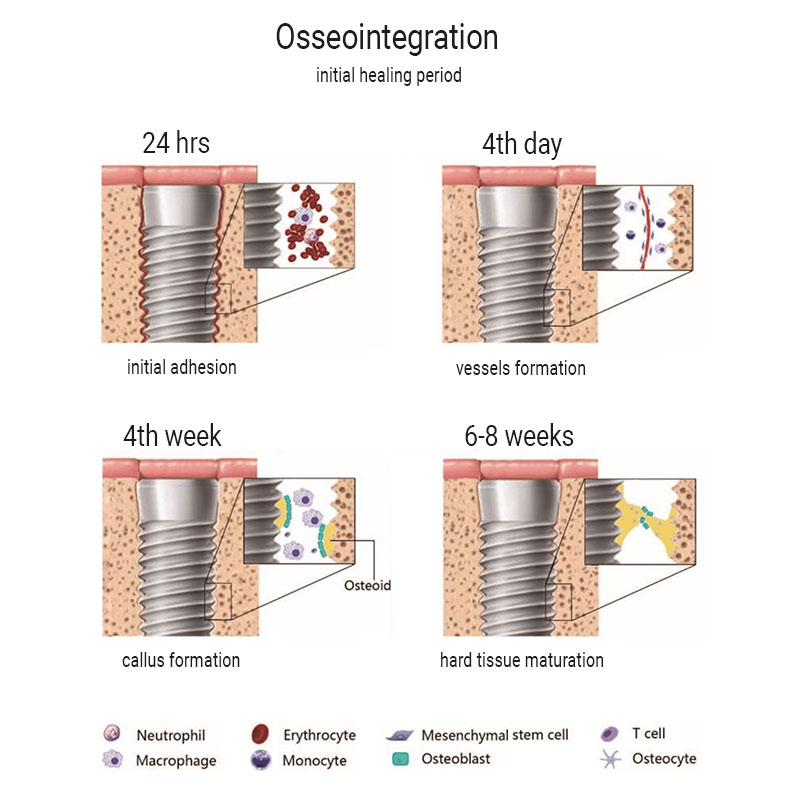
Osseointegration is the biological process through which bone forms a stable interface with the implant surface. The restoration schedule must protect this process while the implant transitions from mechanical stability at placement to biological stability during healing.
Older rules of thumb often described fixed waiting periods for the lower and upper jaws. Modern implant surfaces and better planning have expanded the options, but healing is still individualized. Bone density, insertion stability, grafting, smoking, diabetes control, periodontal health, bite forces, implant position, and the type of restoration can all affect timing.
A clinic should be able to explain why it recommends immediate, early, or conventional loading for your specific case - not simply advertise the fastest option.
When Bone Grafting May Be Needed
Bone grafting is not one single procedure. The type and timing depend on where bone is missing and whether the implant can still be stabilized in the desired position.
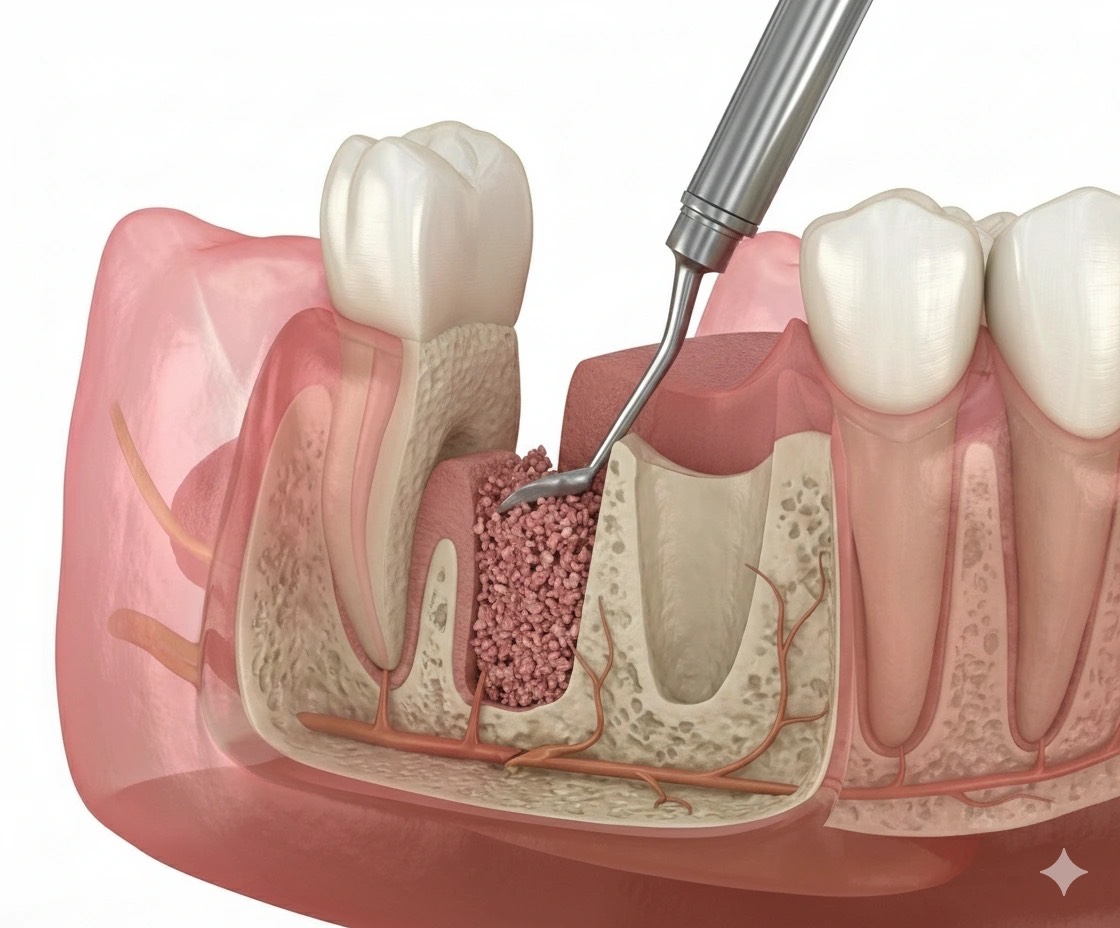
Socket preservation or gap grafting
After extraction, graft material may be placed in the socket to help preserve ridge volume. When an implant is placed immediately, graft material may also be used in the gap between the implant and the socket wall. This does not automatically mean the implant can be loaded immediately.
Horizontal ridge augmentation
If the ridge is too narrow, augmentation may be needed to create sufficient bone around the implant. A small defect may sometimes be managed at implant placement. A larger deficiency may require a staged graft before the implant is inserted.
Sinus floor elevation
The upper back jaw may have limited vertical bone because of sinus anatomy and bone loss after tooth removal. A transcrestal or lateral-window sinus procedure can create additional bone height. When adequate primary stability is achievable, the implant may sometimes be placed at the same surgery. If stability cannot be achieved, grafting and implant placement are usually staged.
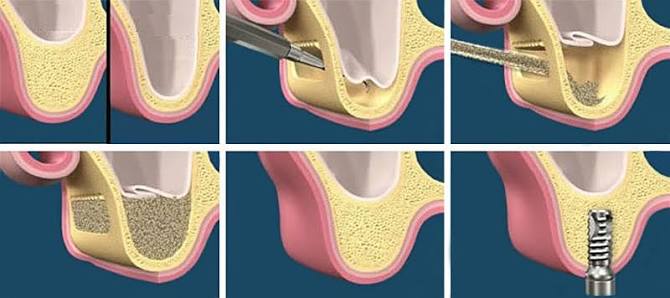
Patient reference: American Academy of Periodontology: sinus augmentation
Consensus guidance: ITI bone augmentation procedures and sinus floor elevation
Dental Implant Cost in Korea
Implant prices in Korea vary by location, clinic model, surgeon, implant system, crown material, and the complexity of surgery. Promotional prices can also be difficult to compare because one clinic may advertise the fixture alone while another quotes the entire restoration.
Illustrative market ranges - not an official national fee schedule
Low-cost promotions may advertise approximately KRW 300,000-400,000 per implant, while many straightforward private-clinic quotations using a Korean implant system may fall around KRW 800,000-1,500,000. Complex grafting, sedation, premium systems, customized prosthetics, or highly personalized care can raise the total. Published promotions change frequently, so verify the date and every inclusion directly with the clinic.
Ask for an itemized quote that states whether the following are included:
- Consultation, panoramic radiographs, and CBCT imaging
- Extraction and management of infection
- Implant fixture, cover screw or healing abutment
- Final abutment and whether it is stock or customized
- Temporary tooth or provisional restoration
- Final crown and crown material
- Bone graft material, membrane, and sinus surgery
- Local anesthesia, IV sedation, medications, and monitoring
- Follow-up visits, suture removal, adjustments, and warranty conditions
A lower headline price may still be reasonable, but it should not be mistaken for a complete treatment price until the clinic provides the full scope in writing. It is nearly impossible to deliver the most individualized care, premium components, extensive planning, and the lowest market price at the same time. Decide which trade-offs matter most to you.
Korean Implant Brands vs. International Premium Systems
Korean implant systems are widely used, and a well-planned case can perform successfully with many established systems. Brand alone does not determine the outcome. Diagnosis, surgical positioning, primary stability, prosthetic design, hygiene, and maintenance remain essential.
An international system may be attractive when a patient wants broader global component availability or a specific material or design. Straumann's Roxolid, for example, is a titanium-zirconium alloy with higher stated mechanical strength than the manufacturer's conventional grade 4 titanium. This can expand reduced-diameter options in selected cases, but it does not automatically eliminate the need for grafting and should not replace proper site assessment.
When comparing brands, ask:
- What is the exact manufacturer, system, implant line, diameter, and length?
- Are replacement components and compatible tools available in my home country?
- Will I receive an implant passport or written component record?
- Why is this system appropriate for my anatomy and prosthetic plan?
- What evidence supports the proposed implant design and loading protocol?
Manufacturer technical information: Straumann material information, including Roxolid properties
Can You Complete the Crown in Your Home Country?
It may be possible to have implant surgery in Korea and complete the abutment and crown with a dentist at home. This can reduce the need for a second international trip, but the plan should be agreed upon before surgery - not arranged after the patient returns.
Confirm that the receiving dentist is willing and able to restore the exact implant system. Request a complete handover package containing:
- Implant manufacturer, system, platform, diameter, length, and lot number
- Implant position and surgical notes
- Insertion torque and stability information when recorded
- Healing abutment, scan body, and restorative component details
- Postoperative radiographs and relevant DICOM/CBCT records
- Grafting materials and membrane information
- Recommended loading date and follow-up schedule
- Direct contact information for clinician-to-clinician questions
Plan the handover before surgery
If the home-country dentist cannot obtain the correct components or does not accept responsibility for another clinic's surgical work, the apparent travel savings may disappear. Ask both dentists to confirm the plan in advance.
How to Compare Implant Clinics in Korea
Korean clinics range from efficient high-volume centers to smaller practices that reserve more time for consultation and follow-up. Neither model is automatically good or bad. The question is whether the clinic's workflow fits the complexity of your case and your need for communication.
Use the Clinic-Doctor-Price triangle
- Clinic: Is the clinic equipped for your procedure, imaging, sedation needs, grafting, and emergency management?
- Doctor: Who diagnoses, plans, performs the surgery, and restores the implant? What is that clinician's training and case experience?
- Price: Is the quote complete enough to compare, and what happens if the plan changes after the clinical examination?
High-volume clinics may offer lower fees and faster scheduling, but consultation time and continuity can be limited. More personalized clinics may charge more while providing longer appointments, clearer English communication, or closer coordination with the surgeon and laboratory. Focus on the actual provider and written plan rather than the interior design or marketing language.
Questions to Ask Before Booking
- What exactly is included in the quoted implant fee? Ask for the fixture, abutment, crown, imaging, extraction, grafting, temporaries, anesthesia, and follow-up to be listed separately.
- Who will perform the surgery and who will make the crown? Confirm the names and roles of the clinicians rather than assuming one doctor manages every stage.
- Is immediate placement or immediate loading being proposed? These are different decisions. Ask why the protocol is appropriate for your specific site.
- Will the first tooth be temporary or final? A provisional restoration may be used to protect healing or shape the gum tissue before the definitive crown.
- What happens if primary stability is inadequate during surgery? A safe plan should include an alternative timeline rather than forcing a fast-track protocol.
- Do I need bone grafting, and can it be simultaneous? Ask what defect is being treated, what material will be used, and how grafting changes the schedule and fee.
- Which implant system and components will be used? Request the exact model and documentation needed for future maintenance.
- How many days should I stay in Korea? Include examination, surgery, postoperative review, suture management, and any provisional adjustments.
- What follow-up is available after I return home? Clarify remote reviews, emergency contacts, warranty limits, and who pays for treatment performed elsewhere.
- Can my dentist at home complete or maintain the restoration? Confirm compatibility and clinician-to-clinician handover before treatment begins.
Planning Your Dental Implant Trip
Before traveling
- Send recent X-rays, CBCT data if available, intraoral photographs, and previous treatment plans through a secure method.
- Disclose medications, allergies, smoking or vaping, diabetes, anticoagulants, osteoporosis drugs, and relevant medical history.
- Request an estimated sequence, length of stay, itemized cost, and alternative plan if grafting or delayed loading becomes necessary.
- Keep travel dates flexible until the clinic reviews your records, and understand that the final plan can change after examination in Korea.
During your stay
- Ask the dentist to show you the diagnosis and explain the chosen implant position and loading plan.
- Keep copies of consent forms, prescriptions, radiographs, implant labels, and payment records.
- Attend the planned postoperative review before flying home whenever possible.
After returning home
- Follow hygiene, diet, medication, and loading instructions exactly.
- Arrange professional maintenance and monitoring with a local dentist.
- Contact the treating clinic promptly for increasing pain, swelling, mobility, persistent bleeding, fever, numbness, or a loose restoration.
The Bottom Line
Dental implants in Korea can be a cost-effective option for international patients, but the safest plan begins with diagnosis rather than a flight date or promotional fee. Some cases can receive an implant and temporary tooth during one stay. Others require a staged approach over several months, especially when bone augmentation or sinus surgery is involved.
Compare the complete treatment plan: the clinic, the doctor, the prosthetic design, the implant system, the grafting strategy, the written cost, and the follow-up pathway. The best value is the plan that can be performed predictably and maintained after you return home.
The better booking questionInstead of asking only, 'How much is one implant?', ask: 'What is the complete treatment sequence for my case, what is included, and how will the implant be maintained after I leave Korea?'
Medical disclaimer: This article provides general educational information and is not a diagnosis or individualized treatment recommendation. Implant timing, imaging, grafting, medication, anesthesia, and travel decisions require an examination by a licensed dentist or relevant specialist. Prices are illustrative market examples, not guaranteed quotations or an official national average.
About ORA Korea
ORA Korea helps international patients understand and compare dental treatment options in Korea. Our goal is to make treatment plans, materials, timelines, clinic information, and follow-up requirements easier to evaluate before patients book care.
Sources and Further Reading
- Morton et al. Group 5 ITI Consensus Report: implant placement and loading protocols (2023).
- European Association for Osseointegration position paper on immediate implant placement (2023).
- American Academy of Oral and Maxillofacial Radiology position statement on CBCT for implant planning.
- American Academy of Periodontology patient information on sinus augmentation.
- ITI consensus guidance on bone augmentation and sinus floor elevation.
- Straumann material information for titanium, Roxolid, and ceramic implant materials (manufacturer source).