
Written byDr. John Yoo
Updated August 2026
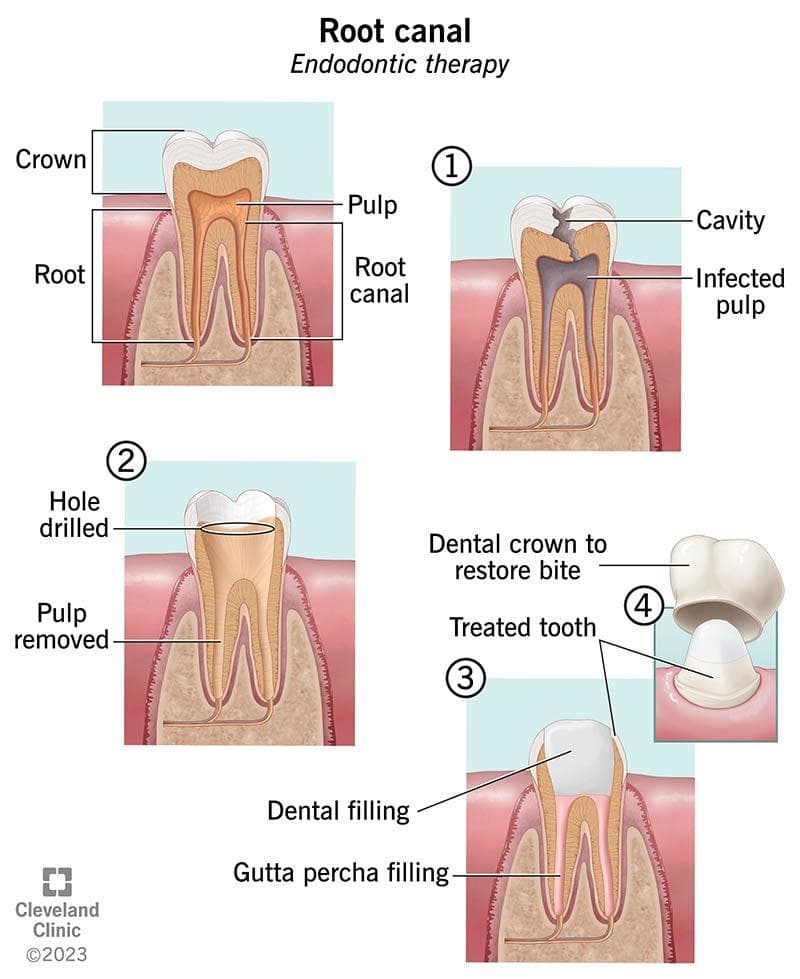
A root canal can sound intimidating, especially with all the misinformation that has circulated online. But the basic purpose is straightforward: remove infected or irreversibly inflamed tissue from inside the tooth, clean and disinfect the canal system, seal it, and preserve the tooth so it can keep functioning.
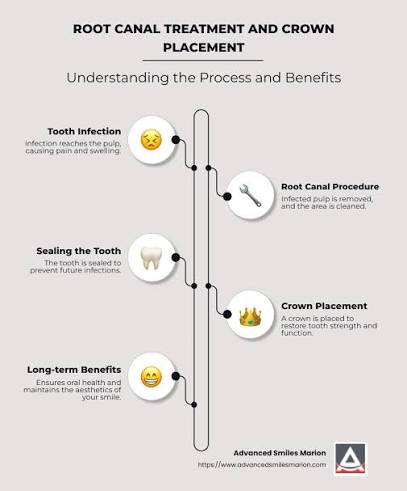
One important point for foreign patients in Korea (or anywhere) is that a root canal and a crown are not the same treatment. They are often related, but they are separate steps with separate fees. The root canal treats the inside of the tooth. A crown, when needed, protects and restores the tooth afterward, especially if it has been significantly weakened.
That distinction matters because a clinic may advertise a low “root canal price,” while the total cost can be quite different once the final restoration is included.
What a root canal actually does
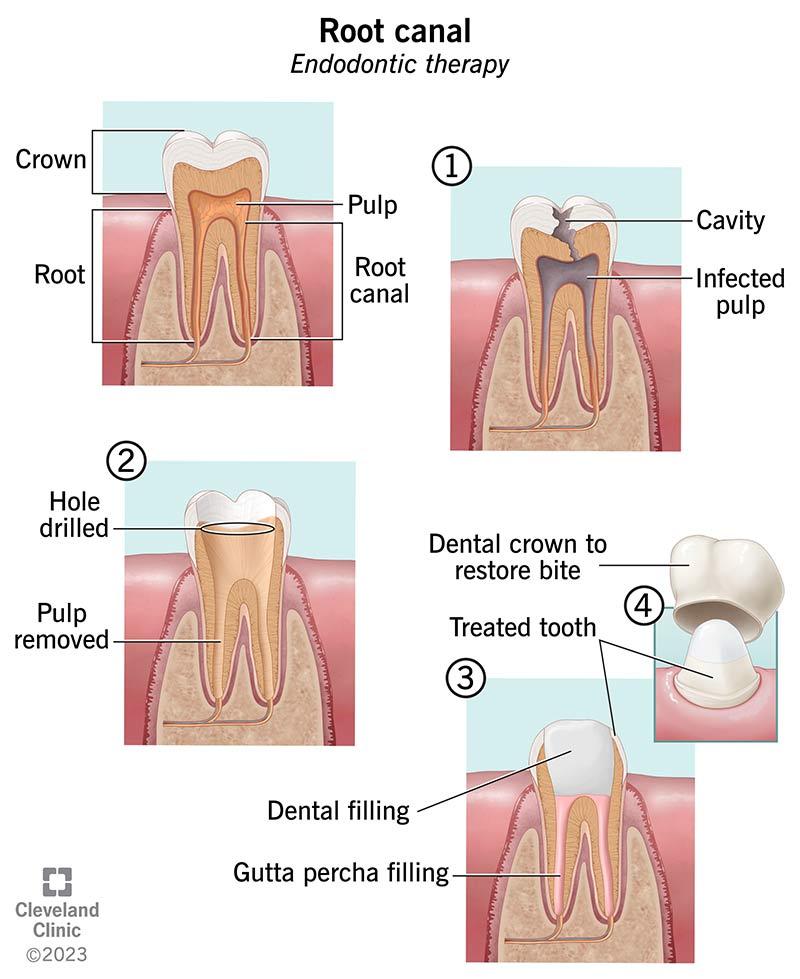
The American Association of Endodontists explains that root canal treatment removes inflamed or infected pulp from inside the tooth, carefully cleans and shapes the canals, then fills and seals the space. The American Dental Association also describes root canals as a way to save a tooth that might otherwise need extraction.
Translation: the dentist is not “killing the tooth.” The tooth is already in trouble. The treatment is trying to preserve it so you don’t need to jump immediately to implants, or worse, a missing tooth and diminishing bone support.
When a root canal may be recommended
A dentist may recommend root canal treatment when there is deep decay, a cracked tooth, repeated dental work on the same tooth, trauma, an abscess, or nerve inflammation that will not settle.
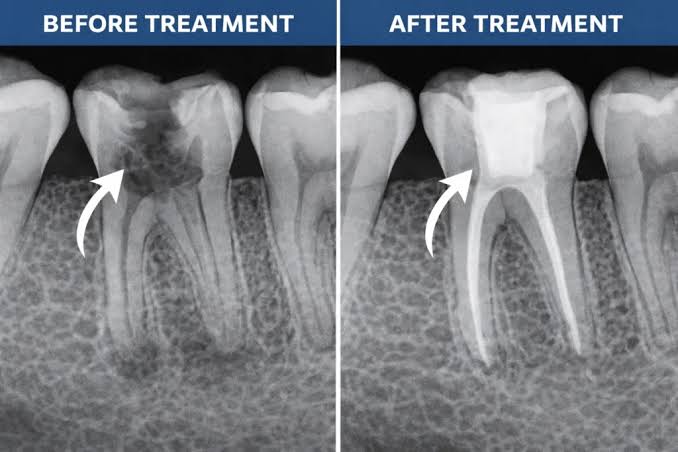
Common warning signs include lingering sensitivity to hot or cold, spontaneous toothache, pain when biting, swelling, gum pimple near the tooth, or a darkened tooth. Some teeth have no symptoms and are found on X-ray.
Why the crown part matters
After root canal treatment, the tooth may need a final restoration. For front teeth with small access openings, sometimes a filling is enough. For molars and premolars, crowns are commonly recommended because chewing forces are higher and the remaining tooth may be weaker.
This is why a low root canal quote can be misleading if the crown is not included. The final cost may include:
- Root canal treatment
- Medication or temporary filling between visits
- Core build-up
- Post, if needed
- Final crown
Typical Korea planning ranges
Pricing depends on tooth type, number of canals, whether a specialist is needed, and whether a crown is required. As a general planning range for private-pay foreign patients:
- Front tooth root canal: often around KRW 150,000 to 400,000 (roughly $105 to $285 USD)
- Premolar root canal: often around KRW 200,000 to 500,000 (roughly $140 to $355 USD)
- Molar root canal: often around KRW 300,000 to 800,000+ (roughly $215 to $570+ USD)
- Crown after root canal: often around KRW 400,000 to 1,000,000+ (roughly $285 to $710+ USD) depending on material and lab workflow
A retreatment, infection, complex canal anatomy, fractured tooth, or need for a specialist can change the number.
How this compares withthe U.S.
U.S. cash-pay root canal and crown costs can vary widely. CareCredit’s dental cost guides list root canal pricing by tooth type and crown costs that often reach into the high hundreds or thousands of dollars. GoodRx also places many U.S. crown estimates around $800 to $2,500, depending on material and location.
That is why some patients look at Korea for combined root canal and crown treatment. But the better reason is not just lower cost. It is whether the diagnosis, imaging, treatment plan, and crown timeline are clear before you fly.
How many visits does it take?
A simple root canal may be completed in one visit, but many cases take two or more visits. A crown may require an additional scan or impression, temporary crown, lab fabrication, and final delivery.
Same-day crown technology can shorten the process in select cases, but the root canal tooth still needs to be stable enough for final restoration. If there is active infection, pain, swelling, or uncertainty about the prognosis, rushing straight to a final crown may not be wise.
A realistic travel plan might look like this:
Day 1: consultation, X-ray or CBCT if needed, diagnosis, root canal start
Day 2-4: continued treatment or symptom check, depending on the case
Day 4-7: scan or impression for crown if the tooth is stable
Day 7-10: final crown delivery or same-day crown if appropriate
Some cases move faster. Some should not. Your dentist may not know exactly until the condition is examined in person, or even during the treatment.
What makes a root canal case risky
A root canal may be less predictable if the tooth has a vertical crack, severe bone loss, large infection, previous failed root canal, curved or blocked canals, untreated grinding, or not enough tooth structure left for a crown.
This is where a foreign patient should be careful. The question is not only “Can you do it while I am in Korea?” It is “Is this tooth worth saving, and what is the backup plan if it is not?”
What to ask before booking
Ask these questions before comparing prices:
- Is the nerve inflamed, infected, or already dead?
- Is this a first-time root canal or retreatment?
- What is the chance this tooth still needs extraction?
- Will I need a crown after the root canal?
- How many days should I plan to stay in Korea?
- What if pain continues after I fly home?
The practical takeaway
Root canal treatment is not just about getting out of pain. It is about deciding whether a tooth can be predictably saved and then protecting it correctly.
For foreign patients, the best plan is usually not the fastest possible plan. It is the clearest plan: diagnosis first, root canal only if the tooth is worth saving, crown timing based on stability, and a real follow-up plan.
How Ora Korea fits in
Ora Korea helps patients compare root canal and crown options by looking at diagnosis, specialist access, imaging, treatment timeline, crown material, and quote clarity. The goal is not just to find a clinic in Korea. It is to understand what is being recommended before you commit.
Sources and patient safety references
American Association of Endodontists — What is a root canal?
https://www.aae.org/patients/root-canal-treatment/what-is-a-root-canal/
American Dental Association, MouthHealthy — Root canals
https://www.mouthhealthy.org/all-topics-a-z/root-canals
American Dental Association, MouthHealthy — Crowns
https://www.mouthhealthy.org/all-topics-a-z/crowns
CareCredit — Root canal cost guide
https://www.carecredit.com/well-u/health-wellness/root-canal-cost/
Found this useful?